When the season arrives in daylight
December in Melbourne can mean a table still bright after dinner, a jumper left on the back of a chair and a plan that changes when a hot day makes the kitchen unbearable. For a household with ties to the Philippines, the shape of the season may be familiar even while the weather, work calendar and distances between relatives are different. Decorating is one way to make those differences visible without having to settle which place feels more like home. It can be as ordinary as putting a paper star in a window and waiting until the light outside finally fades.
A light that does not have to match
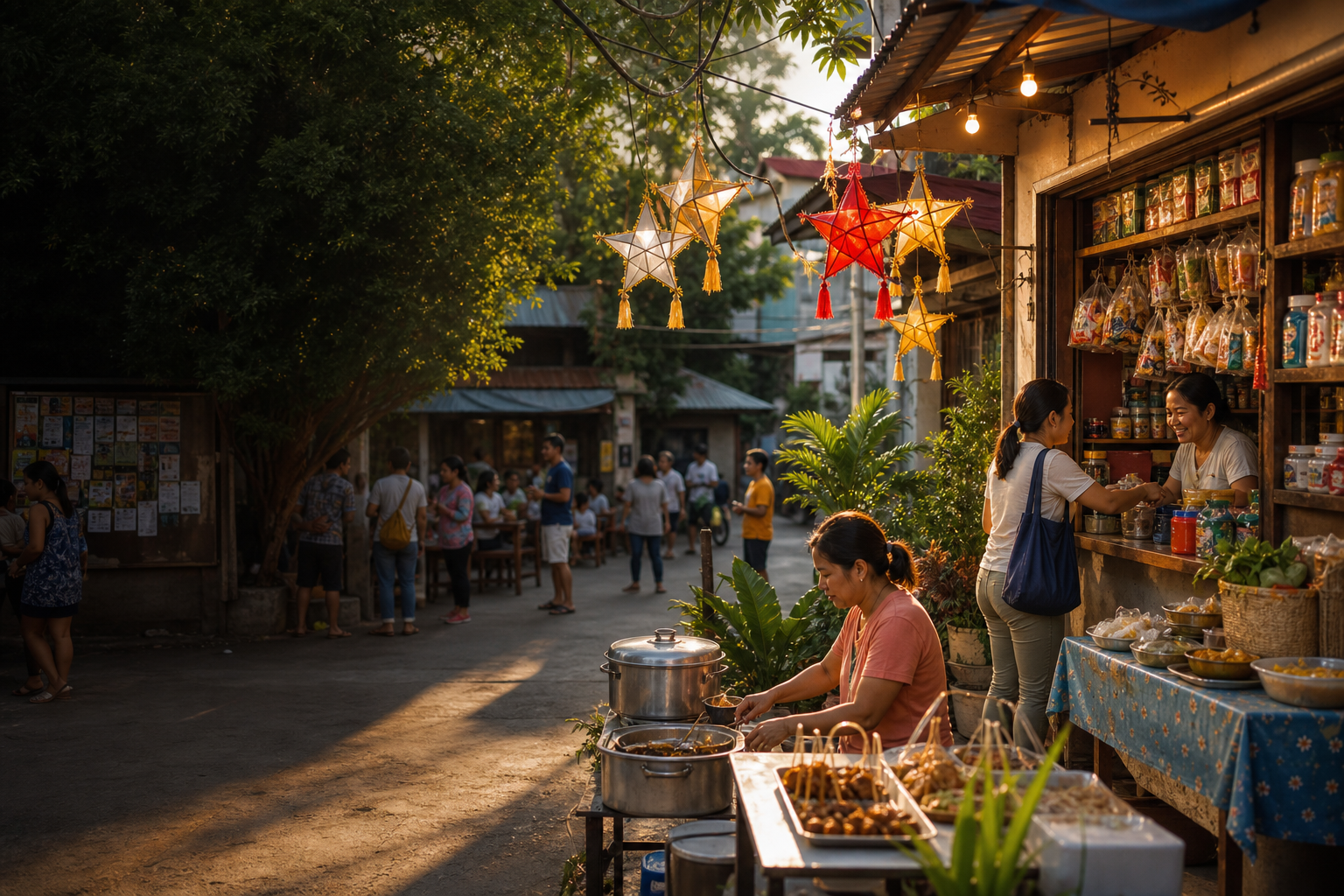
A parol is a Filipino Christmas lantern, often made in the shape of a star. A family might have room for a large display, or have one window in a rented flat where a small decoration is all that fits. One person may want to make something from the materials already in a drawer; another might not want to decorate at all. The smaller version is not automatically a poorer imitation. It might be the first tradition that someone in this household has been able to make entirely their own.
What was kept and what was changed
When a tradition crosses a border, it arrives with choices attached. An object might have been too heavy for a suitcase. A celebration that once stretched across several houses may now have only enough chairs for a few guests. A call to relatives overseas might work better the morning after a gathering than in the middle of dinner. Each change has a practical reason, even if it also carries a feeling. Leaving space for a different arrangement honours the people actually in the room, not just the version of the occasion that lives in memory.
Give children a way to contribute
A child who has never spent Christmas in the Philippines may know the season through a song, a voice message or a relative’s story. That knowledge is not a test with a right answer. Put paper on a table and let the child choose the colours. Ask whether the star should go inside the window where the household can see it, or somewhere a passing neighbour might notice. The answer may be practical, playful or completely different from what an adult expects. That is how a shared tradition gains a new detail instead of becoming a lesson to sit through.
Let music be an invitation
A song can make a familiar space feel different, but not everyone in a household recognises the same music or wants it playing through the afternoon. A useful compromise can be an intentionally short playlist where each person chooses something and says only as much about it as they like. One song may recall a home that is still visited; another may belong to the bus ride to school this year. They do not have to come from the same language or decade to belong to the same afternoon.
Do not assign care to the same person
The household that hosts can become the household that shops, cooks, clears up and remembers to make the call. If preserving an occasion always means one person absorbing all of that work, keeping every detail is not necessarily an act of generosity. A guest could bring cold drinks, a family member could set up the call, and someone else could wash the dishes before leaving. Not every offer needs to come with a family photograph or a story about how things were done before. An hour of practical help is a tradition worth keeping too.
A public celebration and a private one
A community festival can be a good place to hear music, look at lanterns or have a meal with a friend who is curious about a Filipino Christmas. It can be just as meaningful to leave after one performance and go home. A public celebration offers company; it does not decide how private households should spend December. Some people are working, missing someone or simply trying to get through a busy stretch. They should have room to enjoy a little of the season without having to explain why they are not doing more.
Something to take into next year
When the paper folds or the spare lights go back in the cupboard, make a note of one thing that felt worth repeating. It could be as small as the child insisting on a blue centre for the star, or turning the music off so everyone could hear a call. That note is not an instruction for the next household or a template for the whole community. It is just a record of what worked with the people, the daylight and the time you had together this year.
About this column
This is an original LocalPinoy editorial reflection, not a memoir, interview or report of a particular family. Explore the source-linked calendar for public celebrations, and check dates and arrangements with the venue before going.
Explore the directory ↗